Open almost any operation theatre list in Pakistan and a diathermy machine — the electrosurgical unit — is somewhere on it. That is because one machine covers an unusually wide range of surgery: it cuts tissue and stops bleeding at the same time, using high-frequency current. This guide walks through where diathermy is used, speciality by speciality, and which type of unit each kind of work calls for.
Why surgeons rely on diathermy
Five benefits explain why electrosurgery became standard practice:
- Bloodless field — vessels are sealed as the surgeon works, so the operative field stays visible.
- Precise cutting — the cut follows the electrode exactly, with control a blade alone cannot match in soft tissue.
- Faster surgery — cutting and coagulation in one pass shortens operating time.
- Less blood loss — small vessels are closed the moment they are divided.
- Quicker recovery — less tissue trauma and shorter procedures support smoother healing.
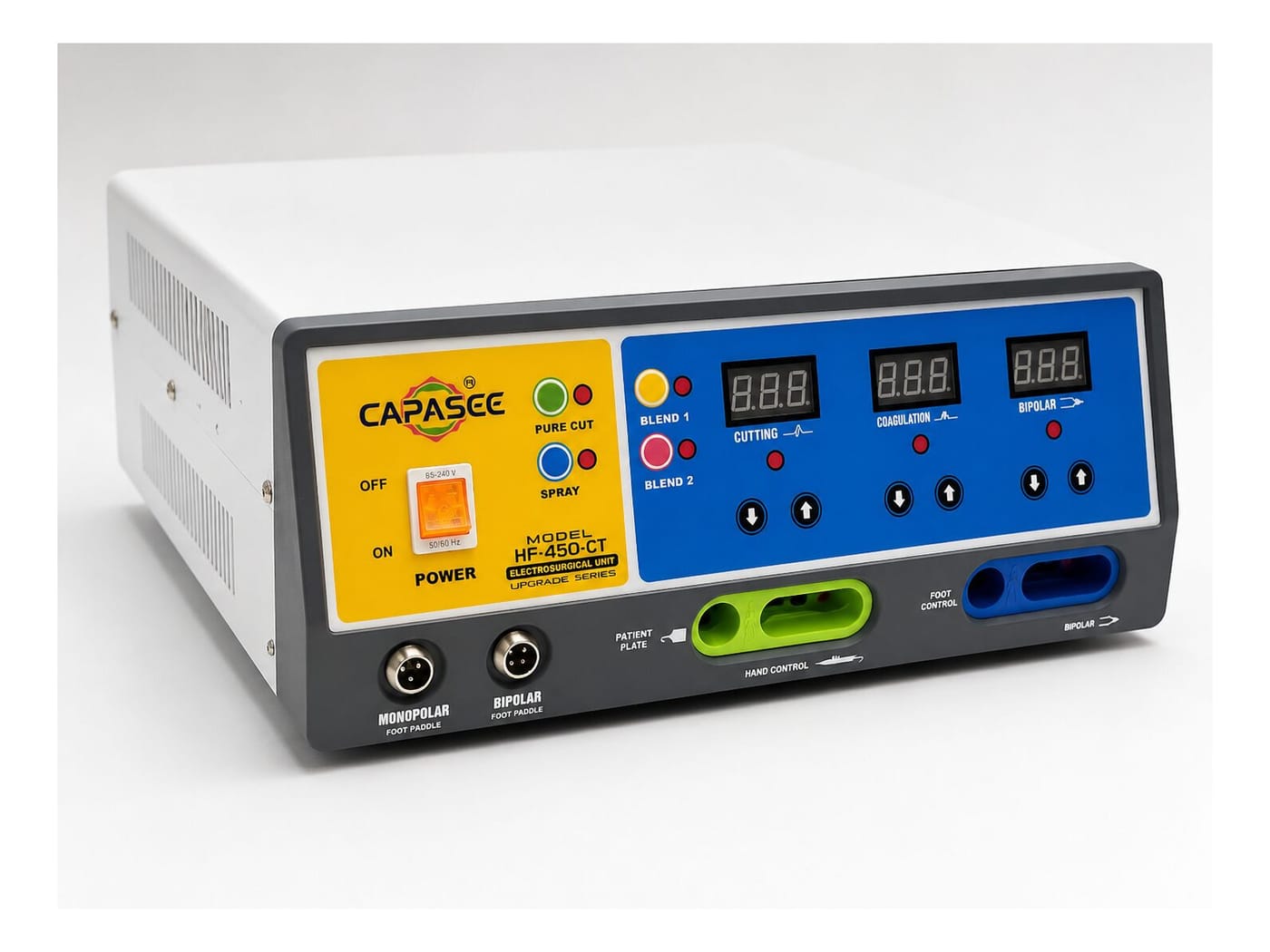
The machine offers three working modes. Cut divides tissue with a continuous current. Coagulate seals vessels and stops bleeding. Bipolar passes current only between forceps tips for precise, localised work on delicate tissue. A modern unit combines all three — see our plain-language guide to electro surgical unit prices and how an ESU works.
Uses by speciality
General surgery
The broadest use: incisions, dissection and haemostasis across abdominal and soft-tissue work, including procedures such as haemorrhoidectomy, where controlled coagulation is central to a clean result. A mid-to-high power combined unit (monopolar + bipolar) is the standard theatre choice.
Gynaecology
Diathermy is used across open and minor gynaecological procedures for cutting and for precise coagulation of delicate tissue, where the bipolar mode earns its place.
ENT
Tonsillectomy and control of epistaxis (nosebleeds) are classic ENT uses — work in small, vascular spaces where bipolar precision and reliable coagulation matter more than raw power.
Orthopaedics
Electrosurgery supports soft-tissue work around joints and in trauma surgery — managing bleeding in muscle and soft tissue while the orthopaedic work proceeds.
Dermatology and aesthetics
Skin tags, warts, moles and lesion work, usually with a dedicated RF skin cautery unit — covered in detail in our dermatology cautery guide.
Dental
Soft-tissue procedures in the mouth — the dental cautery guide covers the dedicated units.
Minor and emergency procedures
Abscess work, wound care and everyday clinic procedures where a small vessel needs sealing quickly and cleanly.
Which machine for which work?
| Work | Suitable Capasee unit | Price (PKR) |
|---|---|---|
| Full OT — general surgery, gynae, mixed lists | HF-450 / HF-450 CT | 195,000 |
| Busy general OT | HF-400 CT | 105,000 |
| Clinic + minor OT, ENT and dental lists | HF-250 CT | 76,000 |
| Delicate bipolar work | HF-100 CT Bipolar | 125,000 |
| Dermatology and aesthetic skin work | HF-100 CT RF Skin | 95,000 |
Price context for the full range is in the surgical diathermy price guide and the cautery machine price guide. For advice matched to your procedure list, WhatsApp Capasee on 0321-4444595 — the team has supplied theatres and clinics across Pakistan since 1986.
Frequently Asked Questions
What is a diathermy machine used for in surgery?
It cuts tissue and seals blood vessels using high-frequency current. It is used across general surgery, gynaecology, ENT, orthopaedics, dermatology and dental work — anywhere a surgeon needs a bloodless field and precise cutting.
What is the difference between monopolar and bipolar diathermy?
Monopolar current passes from the handpiece through the patient's body to a return plate; it is the general-purpose mode. Bipolar current passes only between the two tips of a forceps, giving localised coagulation for delicate tissue. Most theatres use a combined unit that offers both — see monopolar vs bipolar explained.
Which diathermy machine is best for an operation theatre?
A combined monopolar + bipolar unit in the 300–450W class covers a full general list. Capasee's HF-450 heads that range at PKR 195,000; smaller theatres are well served by the HF-300 CT and HF-400 CT.
Can one diathermy machine serve several specialities?
Yes — that is the normal pattern in Pakistani hospitals. A combined unit in the OT serves general surgery, gynae and ENT lists, while clinics add dedicated smaller units (RF skin, dental) for their speciality benches.